Manuscript Remains

A web blog devoted to reducing the white noise of modern life. I value Culture above the mainstream. Arthur Schopenhauer has been a major influence on my life (though I don't share his misogyny). In many ways I dedicate this blog to his memory.

Thursday, September 13, 2012

Meeting the Dislexyc Grapes

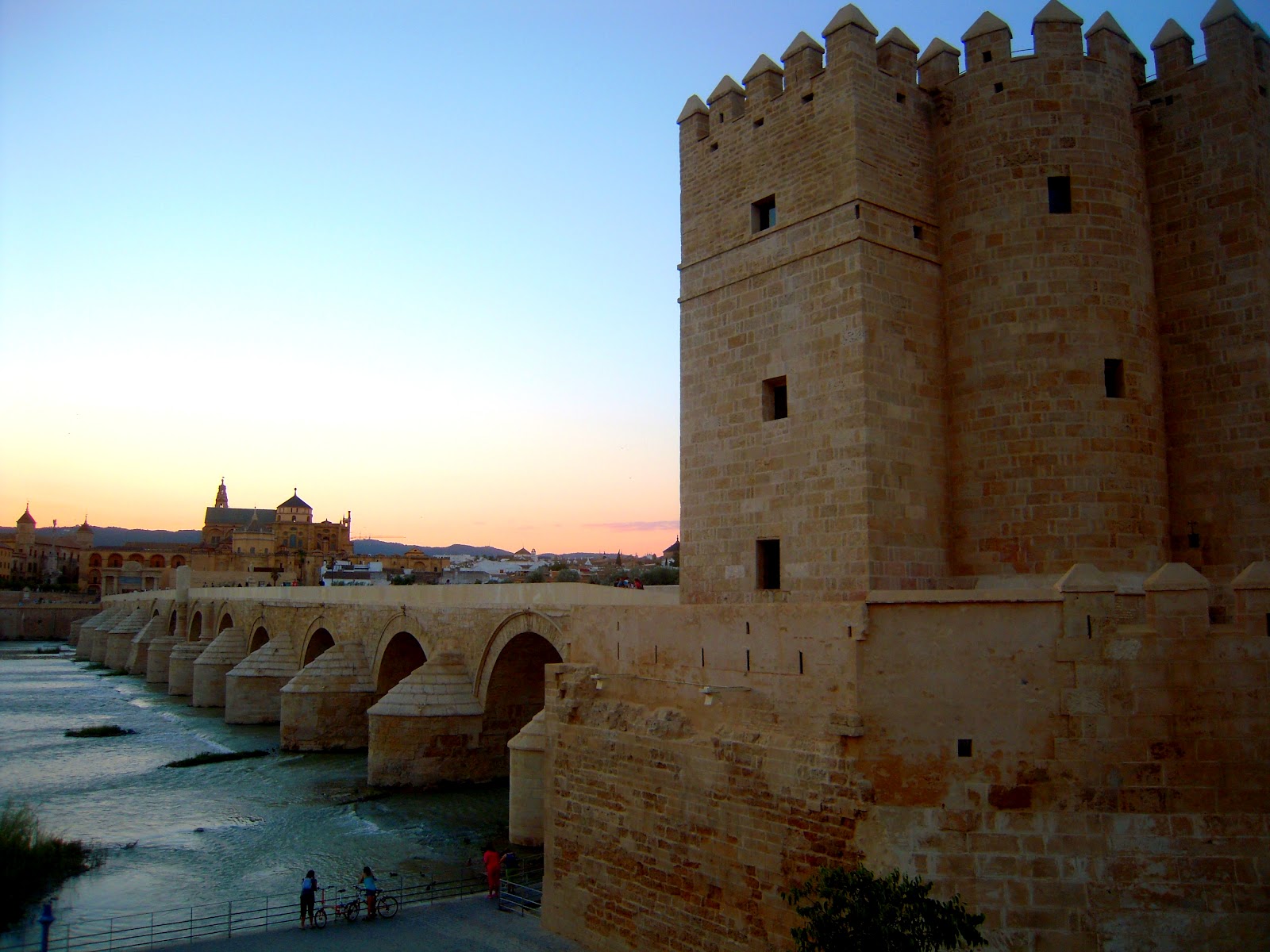
My last night in Cordoba I really didn't know what I was going to do. I had spent many of my evenings wandering the city, crossing and re-crossing the river using the old Roman bridge, passing through the park where locals walked their dogs and socialized. Beyond that, I had my ample share of paella and tapas, wine and cerveza and if I needed entertainment, there was a young violinist playing Bach and popular international pieces nightly by the triumphal arch. 

I had visited the famous Alcazar de los Reyes Cristianos for the elegant, if not touristy fountain display. And I spent the latter parts of my evenings down at the Plaza de Tendillas, my feet in the fountain, drinking beer, watching the kids skip and jump and splash, and the visiting university athletes drink from large Amstel bottles.  

Puta caliente!
The last night was also the hottest. At quarter to nine, it was 43 degrees C. I shook my head, snapped a picture and wandered down the old streets of the eastern quarter, slowly making my way back to the bridge for one last sultry, sunset glimpse of Cordoba. I wiped the sweat once more from my neck, airing out my shirt for the fifteenth time. Certainly the guidebook had advised against traveling in July and August. But I figured there would be less tourists and I was right. I suffered in the night, I sweated and drank umpteen bottles of water but the crowds were small in the streets. Manageable, really. And for me that  was a plus. Less people to deal with. At the Mezquita, the famous Mosque of the 8th century, now converted into a Catholic Church, there were spaces of relative peace. Tourists held up their digital cameras but you could take pictures of the pillars and the beauty without knocking elbows.

Overall, I never once felt like I was jostling with others as I had in Madrid's more bustling plazas. The squares of Cordoba were comparably quiet and at night, beyond the babbling of the fountains, one could hear the moderate hum of conversation and giggles of children. 

I stayed in the old part of the city above a local restaurant. My host and hostess owned the establishment where they served middle eastern fare and I spent four out of my six nights dining and drinking there. Following my last walk through the city, making sure to avoid the street of brothels, I found myself back at the tavern. 

My host, welcomed me, shaking my hand, a cigarette in his other. He was a slim, bearded Turkish man with long curly, black locks who spoke only his native tongue and Spanish. Besides the restaurant, he was a locally-famous flamenco musician who fused the world of Istanbul with Andalusian. I practiced my Spanish with him the first night I arrived and even sat with him and his friends and the server, Marie's friends. 

It was in the tavern three nights previous that I met Beatriz. I'm sure I might still be there if an obstructing angel hadn't gotten in the way. It was around ten o'clock. After a plate of couscous, I was drinking my third beer when she arrived on bike, visiting her friend. Marie and her chatted and then she sat with me. Beatriz knew a little bit of English and I enough Spanish. I learned a bit more with her help but mostly my impromptu lessons were forgotten. I enjoyed far too much gazing into her Andalusian, almond eyes. Her knee knocked against mine now and then and a  cursory, shoulder-length strand of black hair kept falling away from its place behind her ear. Her cheeks were high and her lips lovely. I loved watching her speak Spanish.

In our Spanglish we talked about music; I said I played and I recorded some songs while living in Vancouver. I was also writing two books, one about my childhood, the other a verse novel about an Austrian winemaker that falls in love with five women (cinco mujeres). She seemed impressed. As for me, I nervously flipped through the pages of my Spanish phrasebook to find the right words. I remembered what I could.

It seemed that anyone else who might join our conversation was only interrupting or annoying us. I wanted to learn more about her. She was a pharmacist and worked long weeks. That weekend, a three day holiday. She had tomorrow, the Monday off. I asked for her email address. "I don't do email," she said to me. "Then your phone number?" I responded.

I passed my pen and journal over to her and she took them with her light-olive hands. She jotted her number down and told me to call her.

"I'll do my best. I want you to be my personal tour guide."

And I did try. I tried to call her the next day. I went to several pay phones but they wouldn't work. One stole my euro, the other kept spitting my money back out, the metallic clink of rejection causing me several times to slam down the pink T-mobile receiver in disgust and frustration. 

What could I do? I didn't have a cell phone so I couldn't call her that way. And that night, both my host and hostess didn't return to their apartment so I had no to ask for their phone. I figured it wasn't meant to be and left it at that. My romantic side was effectively invaded by the practical one and all my fantasies of a mid-vacation tryst vanished into the banality of acceptance.

So it was interesting to meet Marie's boyfriend tonight, my last night in Cordoba. The Turkish man promptly introduced us, asked if I was hungry (I was fine) and went back to the kitchen, probably to prepare some more couscous. 

Marie's boyfriend and I sat outside in the heat, the sky darkening, the synthetic orange glow of lights glowing sadly, drably from their wall lanterns. We drank beer. He knew a little English but he was impressed with how much Spanish I had picked up in the last two weeks. 

He also asked about Beatriz. I told him: tell her I did my best but the phones in Spain don't like me. I wanted to say that the first night I met her I could have kissed her right then and there but it was getting late and we were both tired. I also wanted to say she had the kindest and most beautiful face I had seen since my arrival. But I wasn't proficient enough for such poetics. Ella no tiene correo electrónico y no tiene un teléfono celular (She didn't have email and I didn't have a cell phone.) It was fate, yes and my obstructing angel.

It was then that two guys, one of them on bike pulled up. They spoke the rapido Spanish of the south with Marie's boyfriend and when I tried to offer my basic conversation, they said it was okay if I wanted to speak English with them. My eyebrows jumped up. Wow, actually English-speakers. I had encountered one or two on my travels in Spain.

They were hungry and we went inside the tavern so they could order some couscous. Joining them, I had another beer as did they. They asked where I was from, what I was doing in Spain. Mostly traveling and wandering, I explained. Brandan had spent some time in Dublin which explained his distinct English-Irish accent and when he said 'fuck' he reminded me of Colin Ferrel in In Bruges. As for Andrés, he had a more American-sounding accent.

They ate pretty quickly when their food arrived. I commented on their appetite. 

"Well, we're high," Brandan said smiling, nodding his head, his mop of curls shaking. 

I chuckled. "Well, I'm drunk."

And the conversation continued on. They told me they were part of a band. What was the band called?

"Dyslexic Grapes" Andrés proudly announced.

I nearly shit myself laughing. It wasn't so much that it was funny but it was just the best name of a band I had ever heard. It was the kind of brilliance best associated with a Monty Python skit. And because it was so brilliant, I found it humorous. 

Then, when Brandan slid a sticker of their band logo across the table I started cracking up again: they reversed the 'i' and 'y' of their band name to enhance the beauty and irony of it all - Dislexyc Grapes. (I proudly wear this sticker on my notebook computer).

We had more beer and chatted for awhile, mentioning bands we liked, books we read. I told him Spain attracted me because of the literature - Lorca, Cernuda, Salinas, Aleixandre and so forth.

As for philosophies, we shared them. The idea of success, for instance, being famous. They claimed they just wanted to party and have a good time. I confessed my whole trip was a means of just having a good time, but also escape, getting away from the locked-in self I was back in Canada. I could have spent the summer working my job, doing the same thing but I decided to take a risk. And it paid off. I could meet people like Andrés and Brandan and that made my vacation more of an experience than just a distraction. 

Marie wanted to close up the bar. We were the last to leave so we paid our share and headed out. Branden grabbed his bike and we walked through the late night streets of Cordoba. They still wanted to drink and so did I. I had a train to catch in the morning (the infamous Renfe episode related in a late August blog) but it was only one a.m. and with the heat and the fan in my room that hardly kept me cool, the chances of falling asleep, no matter what, were relatively slim. Another beer or so and then bed or whatever.

We strolled along the Calle Claudio Marcelo, passing below the old Roman monument from a forgotten century. I had seen the Seneca statue and fountain in my wanderings and I knew this city's history stretched further back than the Moors of Abd al-Rahman I's time. But it was interesting, being in such a historically important place, entering the vast square of the Place de Corredera, a place reminiscent of Madrid Plaza de Mayor to have Andrés comment on how sick he was of his hometown. 

My eyebrows jumped up again. Why was that?

He wiped the brown hair falling low over his brow. "It's always the same people, the same crowds, the same things." He said. "The tourists and the flamenco. The government puts all the money into promoting flamenco. All the arts grants of the south go to flamenco. And I don't mind flamenco. I think it is good, but there is more to Spanish music than flamenco."

I nodded. I felt the same about Canadian literature. It was always old women writing about the prairies or another story by Alice Munro about the distance between a woman and a man in marriage. If not that, some story about immigrants in Toronto who happened to be from Pakistan or India.

And like Andrés, I didn't really mind some of it, but I understood. Money always goes towards enhancing the cultural stereotype so when the tourists arrive, they can find their preconceived notions easily and feel satisfied in their search. And I suppose every country is guilty of allowing their iconic image of themselves to take centre stage in tourism booking offices. Germans have Bavaria and bratwurst, the Dutch have Zeeland and the windmills and the French Paris, the Eiffel Tower and the idea of Parisian, Bohemian Romance. Complexity of culture is hard to sell.

I also mentioned that I self-published a book. Andrés said he wanted to read my book.

We stopped for beers in a small bar on the far south-west corner of the square. The crowds here too were spare, the conversations, like the candles on the tables, almost out. It was only a matter of time before this place would close up. We stood outside at a tall wooden table. I had my tenth beer of the night. After my failed attempt at smoking marijuana ("you're not inhaling right, man..." Brandan cautioned, "it's good shit, don't waste it..."), Andrés asked if I wanted to hear some of their music. Of course, I said coughing. 

I listened and was surprised at how amazing it was. While eating couscous earlier, Branden moaned he wasn't a good drummer. But with the over-sized earphones on my head, listening to the first track of their music on his small mp3 player I had to think otherwise. I wasn't prepared for how good they were.

I loved it. The square disappeared, the night was less intense in terms of heat. Of course, their music was nowhere (thankfully) near flamenco in style. I couldn't quite put my finger on it but I know it was incredible. They had their own distinct style though I could hear some blues and alternative music flowing through the guitar riffs and drum beats. It wasn't typical of anything but it was playful like their band name.

But sadly, the beer had to be consumed because the small bar (really almost a closet with alcohol, beer kegs and a bathroom) too was closing. I walked with Andrés and Brandan back to my host and hostess' apartment. The heat hadn't really let off and I was eternally thirsty. I shook their hands above the wet, hosed-down streets, regretting that I had not met them earlier in the week. I would have loved playing guitar with them, jamming with the Dislexyc Grapes.

For those of you read this, I highly recommend them. Check out the link above. And though I have no Spanish beer on hand, I raise a glass of Dutch jenever to them and their future success or however they want their recognition. To Andrés and Brandan.

And can't forget, Beatriz, wherever she might be, the Cordovan beauty that got away and didn't believe in email.
Brandan y Andrés

Tuesday, September 11, 2012

That Lost Sense of Home

It's raining in Kingsville. Apparently it hasn't been like this all summer. Which is nice to know, considering last year. But a light rain after a dry summer, a kind of gift. 

I hope the autumn is dry and cool and there are few days of showers to mar the smoky air. I look forward to watching the corn fields come down with the harvest. I am looking forward to seeing the leaves yellow and orange. 

I am looking forward to this. And following it, winter. 

But I can't help but say I'm a little bewildered. Leaving Europe was like leaving the comfort of something so familiar. Almost as if I was saying goodbye to a beautiful woman, walking away from her presence and bed to return home to another woman, a kind, but unloving wife. And it's not that I've cheated myself or anyone, just seen something new, something different, a way of life that I would say makes more sense. 

In Germany, you can drink beer in public, on bridges, on park benches, in the streets, on trams and trains. And why not? I rarely if ever saw violence break out. No moments of publich intoxication where the cops had to be called in. The parks are filled in the summer. You can smell the aroma of BBQ. Picnic blankets lie on the grass. There are coolers, bottles of wine. There is nothing really to fear.

Here, the parks are empty, even on the most serene of days.

Spestraat, Haarlem, The Netherlands
In Amsterdam, Haarlem and other Dutch cities it is easy to get around. The trams are so easy to negotiate. The bike lanes are well-paved and amazing. You don't need a car, really. (But be aware of the rules of the road, just because you're a cyclist doesn't mean you can ignore them - and the everyday Dutch are hard on those who defy their regulations.)

Here, the bike lane is the pebbled shoulder in most cities (though some of the bigger are more accommodating of two-wheeled, methane free travelers).

I felt at home in that world. And now I'm 'home'. 

And though it is familiar, I have forgotten the names of some towns and places. I know the roads still but the small differences are there, I can feel them. And it's not all bad, no. But it's not the same.

Before Kingsville, I was in my hometown of St.Catharines. I stayed with friends of mine. They were kind enough to host me for a few days. I didn't really contact family. The old tensions don't seem to go away. We are Dutch so being stubborn (hardnekkig in Nederlands - or thick-necked, how appropriate) and habits like that are hard to be rid of.

But Kingsville, as if the rest of Canada was another continent and in between vast corn fields and wind farms, highways that give one a preview of the prairies. Kingsville where public transportation doesn't exist. Either you drive or bike (on the above-mentioned shoulder). Kingsville where the quiet is continually interrupted by the crickets, the sound of lawn mowers. Kingsville where the liquor store closes at six most nights, where the books on the library shelves are basic bestsellers, literature and art and poetry rare.

Kingsville, the home I would never had expected. Had you told the proverbial previous self of two years ago I would be living here, he would have chuckled and then asked, Kingsville, you mean Kingston, right?

St.Catharines like the other cities of my past are closed doors. I lived in them long enough to discover I didn't feel at home there. But in Germany, I found home. Curiously enough, in Leipzig where yes, the parks are filled and bicycles are seemingly everywhere. Leipzig where it felt like leaving a familiar, loving room where now someone must now touch the other side of the bed and let out a sigh in my absence.

Toteninsel - Arnold Böcklin
The Leipzig of Bach, Schumann, and Mendelssohn. The Leipzig Wagner didn't think too highly of but now he would probably would, what with both the beautiful opera and symphony house facing each other on opposite sides of Augustuspatz. The Leipzig of the silent revolution on Nikolaistraße. The Leipzig where nearby in the late 1700s Schiller wrote his famous An die Freude ('Ode to Joy'). The Leipzig of Klinger and the art museum where you can find my favourite version of Arnold Böcklin's Toteninsel (Isle of the Dead).

Yes, that Leipzig. The Leipzig of friends Sebastian, Mira, Kevin, Tom and crazy Marco who during the volleyball game one Sunday flirted with his teammate's wife. Albeit accidentally and innocently but Marco isn't too innocent.

The Leipzig of trabbi tours, their motorboat, methane-like exhaust and the Stalin building and the Panorama Tower and the grand Promenaden in the Hauptbahnhof where Sundays the groceries stores are overrun. And in the south, the Cospudener See where some parts are for naturists. There on the sand you can find untanned bottoms and love handles without swimming trunks to accentuate their folds. And for one shining, transcendent moment, you might see someone attractive strip down after her bike ride to cool in the waters. Yes, for once, but rare... because you soon learn that most public nudists are overweight, over-tanned men who consume far too much beer, their bratwurt proudly (and unpardonably) on display. In Germany, one needs to misquote the adage and shake your head realizing yes, 'if you don't have it, flaunt it.'

Leipzig for a month and half and I felt more at home than all the collected cities I resided in while in Canada. And like the confused astronaut in a Stanislaw Lem novel, having returned from the stars, he finds it hard to reconcile the then with the precarious now. Where it made sense is behind him and where he is now is a whole another planet. The rules are the same but he feels the unease, unable to fulfill himself with his new predicament. He'd rather be alone and lonely up there, out there than be here.

Home, always a question, a reaching, an enigma. For some home is the kept and complacent lawns of suburbia and the flower gardens and impromptu front porch conversations. There is always that polite wave to a passing car, a recognizable face but still a stranger, a neighbor around the corner, familiar but foreign. You know they have a corgi and take a walk around dusk but that's it. Nameless and you nameless to them.

For others, home feels cosmically misplaced, as if God and his aimless band of angels wanted to tempt the solemn, modern Job, asking him, can you feel settled here when there is something more out there that is more suitable? That lost sense of home, can you live with it?

Of course, it is hard to put roots down in places that don't offer the comforts and cultural richness of a city like Leipzig. One would assume it to be a task in futility to feel at ease in a place like Kingsville when home was briefly there, over there, across the pond in Eastern Germany. Home in the earthy aroma of parks, in the flat tire near the university and the lemony taste of a weiss bier on the Markt. Home, Faust's golden, lucky foot, Mephisto mocking the troubled student above Auerbach's Keller. Rub the lucky foot, the German couple said, and it means you'll return to Leipzig.

One prays this to be true. Otherwise, for now there is Kingsville (and no, it's not bad). At least there is the lovely, verdant scent of nature, that smell of trees in the evening, of wet earth after the rain. And again, let the autumn be a dry one.


Friday, June 1, 2012

Being Ahead of all Parting or Life as a Wandering Guest

Nearly a full month has passed since I landed in Amsterdam. I don't feel tired but I do feel homeless. And not in the dark, weary vagabond-sense of the word. I simply I know what my soul feels like on this planet.

To some extent I feel homesick only for the familiarity. Beyond that, there is a despondent and curious pleasure in moving from city to city. Truly, I miss my home only in that there was structure and cohesion, certainties that could very well have been illusions but they seemed real to me.

Aside from a week in Cologne, I've been a guest in people's homes. And though I've met many people, I am continually and endlessly challenged in trying to understand where the exact boundaries lie, what the expectations are, when I should be present and not present. And when to move on.

I stayed with family outside of Amsterdam. The experience was wonderful, together I saw so many beautiful towns and cities, from Marken to Middelburg. There were day trips to Haarlem as well as the province of Zealand to see the Delta Works. But by the end, two days before I was supposed to leave, I knew I had  overstayed. I didn't want to overstay, I continually asked my host and hostess when is a good time for me to leave. What's normal here for a stay? I wanted to make sure to leave on good terms.

I tried to take advantage of my time by making day trips to Amstersdam. I showed my appreciation by buying wine and bringing flowers. I gave them space.

Then one Saturday night, at dinner, I felt quite small, as if I didn't exist in that moment. The family began to speak entirely Dutch. They had moved on but I was still there physically.

The following day, I even went to church with my hostsess though I didn't want to. I felt I had to otherwise there would be more tension. I didn't understand a word of the sermon and I tried to sing the songs but felt out of place, yet, nonetheless, trying to please my host and hostess, to show them I could be accomodating. 

When I left on Monday, I went to Den Haag and stayed with a urban planning professor from Brazil. I have been using AirBnB, a website where people rent out their rooms, apartments, homes to travelers. R. was an excellent host and I was grateful he allowed me to leave some of my stuff behind. I had planned to simply donate some clothes to charity. When I was near Amsterdam, with family, I had asked my host, if I could store some of my things and pick them up on my way back. He said okay. I even went so far as to buy some souvenirs, grateful I had a place for them. It would be too much dragging thist stuff around Europe. But then my hostess had a problem with it. The week I would be flying back to Canada, they wouldn't be home. And she didn't want to inconvenience her grown kids to be around. She said she would talk further with her husband, negotiate if you will. I said not to worry. In my heart, I figured it would be best to leave the matter and move on. I didn't want to come between them. Again, they had opened their doors and their lives, welcomed me in and for this I am eternally grateful. We had a nice glass of wine on our last night and they toasted me.

I realize, being a guest, you never have the final say and it's better to remain quiet than complain. It's not your place to raise your voice or question anything. One must give up one's expectations and simply accept. This isn't your home, naturally and things change.

Being with R. in the evenings, I would often ask if it was okay, permissible even to watch t.v. with him. I didn't want to trespass on any rituals, be they as simple as doing a crossword alone in a living room or watching Family Guy. Sure, I am renting out a space, I thought but it's a personal space nonetheless. One evening, he shared his meal with me and I received a glimpse into his life. We talked about family, his back in Brazil, mine back in Canada, the similiarities and differences. 

The next morning, he walked me to the train station. We shook hands and our goodbye was formal but kind (I'll be seeing him again at the end of my trip to pick up my things).

I went to Antwerpen next (another AirBnB) and met A. and S. and their little daughter K. I had an excellent time there and made day trips into the old town to see the main sites, the new MAS museum, the sublime cathedral and the main square (not to forget, a true Belgium dish of wine-drowned museels and Vlaamse Frites). At the end of each day, I had some excellent conversations with A. about art and the modern world. In the background, his wife attended to their daughter, bathing her, reading to her, playing with her.

When I left, A. gave me a hug but not S. She was still a wonderful hostess but I know she was guarded. I'm another stranger, a kind of brief invader, posing as a guest. When I arrived, they were a little late coming home. To appolize for their lateness, they offered a place at their dinner table with them, a wonderful vegetable soup with sour creme. K. giggled and laughed and played and watched her Russian cartoon. It was nice being a brief part of their lives, almost a family member. Walking out the door on my day of departure, I knew I wouldn't leave a long impression. By chosing not to embrace me when I left, I knew S. wanted to protect her home against any potential lingerers, whether banal or aggressive, it didn't matter.

Today, the beginning of June, I'm about to leave for Baden Baden. I haven't had breakfast. E. and J. have both left for work. I will leave my keys in my apartment space. Again, here too I have had a wonderful, probably the best time so far. J. and I have talked a lot, seeing that he gets home from work earlier. Last night we took a walk with their dog, Jimbo, along the river in Nuremberg. I could see he was tired and unhappy. For the last ten years he has been working in the hospitality industry. I know the work. It is unkind, ungrateful, there is rarely any appreciation and the stress is often insurmountable. 

It started to rain as we walked under the canopy of linden leaves and on the way back he said if I wanted to come back, I could be their guest, without AirBnB. We were friends and I felt the same. Similiar interests, tastes in movies, beers and wine. He spoke English and I tried to reply in German. His English was in the same shape as my German so we both needed the practice. We could see pieces of ourselves in each other.

When E. arrived home, I said I would retire for the evening. I knew they needed to be alone. They needed to talk about what J was going to do. I respect them, I could relate. Our social time together had come to an end. I had spent several nights with them, a few hours here and there, again, always trying to be aware of what is comfortable or not. I had dinner with them. To show my thanks, I bought wine. 

Sure, I keep thinking, about all my hosts and hostesses, I am renting a space but not their time. They have more than opened their doors to me. They have allowed me to feel a part of their lives when my life has been feeling like a series of leavings.

In Baden Baden, I'm going to be staying with a family. A room and a bathroom. Sure, I'll be in their home but with a private space. I think this is important because boundaries are important - they are personal but also socially political, a defence for one's self against the unfamiliar, the unknown and different. Without them, identities are shaved away and dignity scarce.

Besides understanding these social perimeters, I am learning as a guest to be prepared for all goodbyes, whatever they mean, however they come. Philosophers have always made mention of death being essential to an understanding of life. If we can't be comfortable with death, how can we achieve an appreciation of life? (Or, in my case, how can I be comfortable with departure without an appreciation of where I am?)

In Rainer Maria Rilke's poetry, especially his Sonnets to Orpheus, there is this tender awareness of life and all its vulnerabilities. In the second part, sonnet XIII he writes "Sei allem Abshied voran" or "be ahead of all parting."

Rilke could write these lines because he lived them. He was a peripatetic poet, not someone who lived forever in the same home in the same town of his ancestors. He traveled and wandered widely, he met Lev Tolstoy in Russia and was Auguste Rodin's secretary in Paris. His life was an untenable one and his verses reflect his awareness of never being at home, always searching.

In other words he was a guest on this earth, a guest amongst his friends and family, his hosts and hostesses, often showing his appreciation by dedicating work to them. He composed his famous Duiner Elegies in a castle owned by Maria von Thurn und Taxis, a woman whose relatives lived in nearby Regensburg.

I visited Regensburg this past Wednesday but didn't see the famous palace owned by her family. I enjoyed a weissbier of theirs though, from their brewery, in a cafe called Orphee (how appropriate when I think about it now), an hour before I left that perfect and timeless pastel-town.

Tuesday, May 22, 2012

Artis the Artist in Antwerpen

After weeks of spending hours wandering through European art museums, it would seem the works of Vermeer, Hals, Rembrandt, Rubens and Van Dyck are highly venerated. What a surprise....

While at the Gemeente Museum in Den Haag some time ago, I watched a long procession of Japanese tourists march with silent, albeit stoic determination to Jan Vermeer's View of Delft. Lead by a short woman who spoke loudly, they stared with confused wonder at the masterpiece. They crossed their arms, they blinked and nodded. I was curious as to what they were thinking. Maybe they were frustated at not being able to take a picture. Maybe they felt they had accomplished something by seeing the painting, i.e. they could cross it off the list.  Now they could be content.

I don't know where they went next. Probably not into the rest of the museum where more modern masterpieces by Kadinsky or Monet are being shown. Or maybe they did.

Presently the Gemeente, known more for its 20th century masterpieces is showingcasing the masters typically found in the Mauritshuis. Unfortunately the latter lovely, lavish building is being renovated so everything has been relocated. 

Walking about the Gemeente, the most highly perused works were those of the 16th and 17th century. I saw several Rembrandts (his Homer and Anatomy Lesson), several chaotic works by Jan Steen and of course Vermeer's famous Girl with a Pearl Earring (which will be making a stop in Japan sometime in the next little while).

As much as I love visiting these quiet, sacral spaces, I can't help but wondering about the artists and their lives. Rembrandt, I learned lived a fairly comfortable life, only later to be besotted with debt. Vermeer had many children and thankfully married into a wealthy family. 

As for the modern Van Gogh, his story has become legend, mythologized. People perhaps visit out of curiousity. They've been told he is genius but without the ear-cutting-off-incident, would he still draw the same audience? Is his life more integral to his art or a curious side piece, a tragic story we are darkly amused with? 

When I see the crowds lining up in front of his museum, I can't help but wonder if they would be the same kind of people who would deny him in his own time. (To be honest, I wonder the same about practicing Christians, how many would be Unchristian to Christ if they lived in Jesus' time.)

Rhetorical questions and musings aside, I feel there is often a sad, strange diachotomy between the living and dead in art. Highly prolific artists have come and gone and some have been celebrities - Picasso and Warhol for instance. 

And yet, people are not adoringly drawn to their works. Not so much the modern works - most of the Gemeente showcaing the moderns was empty and the exhibition there echoing with distant footsteps. 

Not to say modern art is unloving (most of the time I feel it lacks beauty and tenderness), I just don't think most people, including art curators and critics have the brains or wherewithall to see what is great without the hype and politics surrounding the art. Human beings, for the most part are social animals (to reference Aristotle - well, to some extent) and being social there is the ailing pressure of one's peers and of course, the mob or the crowd. 

And money. 

The art I saw in the Gemeente only impressed me a little. Maybe I was missing the context. I don't know. 

I left Den Haag for Antwerpen, thinking I would visit the MAS, the new museum on the Stroom and Ruben's house. I visited the former and enjoyed myself but I was enthralled with another artist, not one found in a museum not a household name... well, not yet. 

Artis Karnisauskis, as you may well guess from the name is not a native Belgium. He hails from Latvia. He speaks in addition to his native tongue, Russian and English. And I would say, his modern art is more fascinating and moving than much of what is being produced academically. 

To get by, Artis drives to Brugge and sells his more commercial pieces, sepia scenes of the medieval town in a market square where American, Canadian and British tourist gobble up his work. In themselves, these pieces have a timeless quality, remarkably melancholy. Looking at them, the buildings and towers and the canals seem to shimmer as if the viewer were peering at the scenes in a dream. They look like at any minute the scene will shiver into a fade and we will lose them forever. 

His more abstract art is more intellectual and less romantic but still, there is something baffling, fascinting and heartfelt in them.
Take for instance the above unnamed piece. Before heading to Cologne, I had been staying with Artis and his wife Sandra through AirBnb, a site where locals can advertise rooms available for travelers. This painting hung above my bed. 

I fell in love with this piece. You feel like you are swirling in the smog of life. But on closer inspection, everything is perfectly placed.

The lone cyclist on the left possesses something old world about him. The bike handles are red; he wears a fedora and yet there is something murky and folorn about his distance to the buildings and the high wires. Also, I noticed the dark smog halo around his head. 

I thought about the famous poet Rilke's words, his comment about modern life at the beginning of the 20th century: "Automobiles run me over."

The buildings, the street, the bus to the right are etched with a grid-like pattern. In the sky, a web of wires, interconnecting and strangling. The brown hues of the painting cause almost a kind of viewing asthma, as if we have trouble seeing the painting, inundated with the dirty chaos of daiy life. And yet the orange sky has an autumnal piece, a sadness mixed with vibrancy. It is fiery and there, admidst the lines, an angelic-like figure (perhaps a bird, it is up to our imagination) is caught but not paralized by the electrified sky.

I have seen similar scenes in Amsterdam and Vancouver. 

Another piece has the same orange-red intensity.
This one is more abstract. Two bird-like figures are floating, circling in the green atmsophere. Again, they could be birds, demons or angels. The reddish portion has a star-like quality. For me, it reminds me of a time when I was ill and felt lost inside my own body. The illness was a kind of earth, a dying home inside myself. The red ground of this painting throbs with pain and reality. Upon this ground, a third creature or flower has taken shape and form. Though there is something grim and grotesque in the image, I feel a certain hope, a future in its message. 

This last piece is perhaps the most bewildering. Either we are presented with a stuffed animal or a dead one. A sheep lies upon a white surface and with its one leg, reaches or points up, connected to a kind of kite like image. Again, it is up to the viewer to decide. Either it is a childhood toy, disused, destroyed by rough playing or more likely it is an animal dead, waiting to be used for meat. The kite's image could very well be a reference to the hell of the slaughterhouse. 

While visiting the MAS in Antwerpen, I came across some interesting words outside the Master's temporary exhibit. "Art is not a luxury and never has been. Art seeks answers to life's questions."

For Artis I sense and understand these questions from his work but at times, I feel I need to keep asking and seeing. There is nothing determined here, everything is still open to interpretation. Though the art is silent, it's the viewer and the artist that create the dialgue. 

The evening before I left, Artis told me an interesting story about an another artist he know. "He would paint a painting and then stop. He wasn't happy with it. But he wouldn't paint any more. He would keep coming down to look at it in his studio. He would spend the year looking at it until he finally liked it and realized it was done. It's all attitude. How you want to see. It's all in your head. Your heart."

Interpreting Artis' work requires both head and heart. Otherwise you'll lose something in the experience.

To contact Artis and find out more about his are and commerical work follow the link below

Monday, May 21, 2012

In the Presence of the De-Sacralized and the Disappointing or The Dom in Köln

"Disappointments measure how great our hopes once were." So wrote the famous French author, Honore de Balzac. His characters were typically young men losing their illusions, understanding the world to be a den of thieves.

I think he was on to something. 

For me, Europe has proven to be a bit of a disappointment (and a den of thieves). And it's not that I was disappointed all at once.

No. 

Everything is gradual. 

I suppose this recent climax of disgust has a lot to do with my visit to the Dom in Cologne. I had visited beautiful and quiet churches and cathedrals in The Netherlands and Belgium but found this sacred space to be less so.

First things first, it's right beside the main train station. You walk in and everyone and their iphone-savvy grandchild and grandmother is snapping a photograph. The interior erratically flickers with flashes. It's like looting accept they are stealing the solemnity through their actions. Another world heritage site checked off. Here take a picture of the family in front of the nativity scene. Great. Great. Now you can go home and show your idiot relatives what everyone else is showing their idiot relatives.

I walked around but didn't take a picture. Why bother? I could see the place's beauty but it felt gutted out, like an animal on a butcher's block. There was nothing moving about the place anymore. The horde had gotten here first.

And horde doesn't mind paying or so it seems.  

If you want to walk to the top of the belfry, it costs you a few euros. To stow your coat or backpack in a locker is five euros.

You have to go to the bathroom, that's 0.50 euros thank you. 

If you want to visit the treasury, another five euros. Danke schon. 

But god, the bathrooms in Europe. I can understand the train stations. A lot of dirty people are coming and going, a lot of riff raff. Better to keep an eye out. But then I went to the movie theatre in Antwerpen. Nine euros to see a film. Sure, the seats were comfortable and the screen was big (they are in the cinema) but get this, I had to pay 0.40 euros every time I had to pee. I wish I knew this before I drank that beer in the pub. 

But nine euros. Don't you think that should cover the right to use the toilet?

Getting back to Cologne, walking around the beautiful but de-sacralized cathedral, there are beggars and other types milling about. I saw a Muslim woman bent over her cane, bare foot, holding out a paper cup. In the square, just as I was leaving, an Asian woman approached me - perhaps East Indian or Pakistani - and held out a rose to me. I was about to ask, for me when I thought better. Distrusting her, I told her I didn't have any money. She shook her head and walked away. 

What the hell? Whatever happened to asking people if you want to buy something. You just don't hold something out, a gesture of giving and expect something. (Fuck you lady and your fake gesture of good will...).

This whole continent is on the take. Especially when it comes to your bladder and bowel.

I think I need to get away from the cities. The cities bring out the worst, the greediest, the darkest in people. I've always noticed that wherever people go, you'll find a wake of their debris. Beauty is often eroded by the presence of humanity. The less people, the better.

I'm here in Cologne for a couple of days but I think I'll sneak into a museum or two and ignore the morass of civilization. The rest of the tourists here can go fuck themselves.

Saturday, May 12, 2012

The Netherlands - Gezellig en Tijd

There are numerous words that can't be possibly translated into English. These words are not difficult to understand and it's not they are incomprehensible, it is that they belong to the culture in which they were cradled and raised. We can get an idea of what they mean but they can't fully leave the arms of their native language. To better explain, it would be like transplanting a significant landmark, taking the Eiffel tower for instance to New York or the pyramids to Madrid - it simply doesn't work.

Such is the word 'gezellig' (pronounced hguh-zellick) for the Dutch.

When I first arrived in Amsterdam last week, I was jet-lagged and tired. I had spent over twenty long, inpatient hours travelling and felt irritable and melancholic (weemoed in Nederlands). When I finally got into my hotel, I wanted the rest of the world, the city, the streets, time itself to shut the up and let me disappear. 

I didn't feel at home until the following evening when my second-cousin Annette and her boyfriend took me to a 'gezellig' eetcafe (eatery, cafe...) on the Lijbaansgraacht, not far from the Museum District where my hotel was located. In true Amsterdam-fashion, we had biked there and locked our bikes beside the canal. In her email to me, Annette explained the place was 'cosy', the dictionary translation of 'gezellig', but it wasn't close to the meaning.

The dinner was excellent and peaceful, so different to what I'm used to. In North America, everything is rushed, especially our meals. We eat so fast that we rarely taste anything. In the eetcafe, there were no owners or servers eager to get us in and out. They didn't have the attitude of 'the more people in and out, the better the turnover, the better the profit.' No. The place, the atmosphere was urging us more or less to stay (blijven) and be content. The feeling there was beginning to help me fashion my understanding of 'gezellig'.


I kept hearing the word as I went about the streets, following Annette and Niels to the Dom Square for Dodenherdenking, the day of national mourning in The Netherlands, a day of commemoration. At eight o'clock there is two minutes of silence. Standing amidst the crowd, the queen and her family not far away, her face on the large television screen, I could only hear the flapping wings of the pidgeons as they fluttered about the balustrades and balconies. In a city of ringing trams and methane-coughing scooters, bike paths perenially flooded with cyclists hurrying by, the stillness was vast and laden with a gentle sorrow. People had come together gladly to the Dom, pilgrims of memory to honor the past.

Later, meeting up with Annette and Niel's friends, Martin, Joep and Saunders, Martin better explained the word. "It's a getting-alongness. It's family but like everyone is your family and you just relax. You know what I mean." I nodded and watched as Saunders, the architect student mischeviously poked Marin in his belly.

At Cafe Brand, a local hang-out Joep told me to look around. This is 'gezellig' he explained. All of this. Heads close together in conversation, rounds of beers being bought. The intimacy that is cheerful and reflective, never forced, a being-human-in-a-place without worrying about when to leave or where to go next.

I also noticed the lack of televisions hanging from the walls. How often I 've walked into North American bars to be bombarded with flickering screens showing sports highlights and games, the programs and replays all geared to short attention spans.

In The Netherlands, people focus on each other, on talking and sharing. There is nothing to distract your attention, nothing superficial to take you away the moment.

The following day, Annette's father Piet came to pick me up from my hotel. In the backseat, his parents, Oom Dirk and Tante Tinni. Dirk is my Oma's youngest brother. When we were in Amsterdam Noord (North), he pointed out the homes and the places where his family used to live. Time and circumstances have changed little. The light brown brick walls and the curtained windows of these modest, quaint homes still stand in their tucked-away places. The narrow streets are still narrow. It was interesting to be in the place where my father walked and played. Oom Dirk pointed to a new building, the originally having been bombed. When I was a child, I remembered my Oma telling me the same story, how her friends were killed during an air raid.

Today, the faces here in Amsterdam Noord aren't all Dutch. The people living in my father's old neighborhood are mainly immigrants and there is more garbage on the roads and sidewalks. Nonetheless, I felt moved to see a place connected to my own history, a piece of my life before my own life began. 

Later that day and in the days to come I realized I had experienced 'gezellig' in my childhood. The four of us went on to visit Oom Dirk's sister, Corri in a nearby apartment. We had coffee and kookje and I saw many pictures. I didn't understand much of the conversation but it was like being six years old again, sitting in my Opa and Oma's living room, listening to my dad converse with his parents, the clock gently, timidly ringing in the background, the chimes tinkling through the air. The past reclaimed, so to speak.

From there we headed to father's cousin home in Monickendam, north of Amsterdam. Feijke and her husband Jacob offered to host me at the beginning of my trip. I met their son and daughter, Bart and Marleen (also second-cousins) and they took me to dinner. The family came over that evening and I met Corri's son and daughter, Kees and Seike. Kees and I talked at length about politics, history and culture and he too reminded me of the word 'gezellig'. I told him I had experienced similar mornings, afternoons and evenings long ago with my father's family back in Canada.

Besides dropping in now and then, during my childhood it was custom to visit my grandparents on Sunday mornings. Living so close to my grandparents, my family often walked over in good weather. Everyone else arrived from car, usually after church. The cousins sat in the sunroom where Oma brought us cookies and snacks while the grown-ups sat in the living room, my Opa in his favourite chair beside the window.  

Talking with Kees, images from that time tip-toed through me. I told him how much I missed that world. The earthy, chocolate aromas of mocha moving from room to room, the smell of cookies on the plate, the Delft-blue porcelain on the shelves. And of course, the conversation, how the Dutch language traveled boistrously from the living room to the sunroom, the stories, the arguments and of course the laughter. When my Opa died in 1997, the 'gezellig' in my life disappeared or better yet, was dismantled. There were still Sunday morning coffee at Oma's but it was different. The language was still spoken but less joy in the air. My uncles and aunts still gathered but perhaps more out of fear of the future - how soon Oma would die? - than through the original spirit of coming together. I still went but none of my cousins bothered anymore, their lives being busier and more concerned about work and school.

I suppose for me and many others it is true to say there would be no apprecition of 'gezellig' without the presence and impact of time or tijd.

The Dutch are very aware of time. Clocks are everywhere, on churches, on the towers of town halls (stadhuisen) and in museums. In the Rijks, for example, there is a display showing a human Grandfather clock by artist Martin Baas. It appears that a man is trapped inside and with every passing minute, he erases the minute hand of the clock and draws it anew to keep the correct time. The screen on which the face of the clock is displayed looks frosted-over and the man behind it blurred. Baas may be pointing to the blurr of time, how sad and insignificant we are, nameless and faceless.

Such melancholic art is not foreign to The Netherlands. In the Golden Age of Dutch painting, many of the masters created still lifes (or stilleven). On the surface these paintings depict seemingly harmless groupings of flowers, food, books and other objects. But on closer inspection, the flowers are a little wilted, the fruit is going bad and the cup is overturned. The page in the book says 'finis' and the hour-glass with its draining sand is almost done. Everything points to death and time's passing. 

Sometimes the 'momento mori' ('you too will die') is obvious: a skull sits on the pile of books, indicating the futility of life and learning. 

Sometimes the grouping's message is subtle - the walnuts here, for instance. You have to crack them open before you can enjoy them, pointing to how in time, you must live and by living, you are always nearing death, the moment disappearing through its flow and all the pleasures inherit. What else is there? these paintings seem to also ask. If we don't eat the fruit, it will rot without us. If we don't read the books, how else will we learn. We have no choice. The glass of wine or beer must be exhausted otherwise you can't enjoy it without drinking it.

The same with us. The people in our lives, even to love someone else, to hold them, kiss them, talk with them all eventually and irrevocably mean we must prepare ourselves for losing them or being lost. 

Though we don't see people in these pictures, we do manage to see ourselves. The objects are us, the overturned glass like a man lying in his death bed.

(Speaking of art and time, when I visited the Rembrandthuis, I saw how time-consuming it is to make oil paint. The musuem employee demonstrated how the artist had to take oil and powdered stone and mix them using a block-like pummel on a marble board. Rembrandt used fourteen colours. And I could see why. Not only did it take awhile to mix the paint but also the muscle-work required could make you tired. Moving the stone around on the board, the oil and powder together form a sticky substance and you have to hold on and force it.)

Reflecting on our death, we can understand why art is so precious and at times, inexplicably expensive. The artist is dead. They can no longer give us their talent and create their singular, all-too-human beauty and vision. They lived in time, their scenes expressed moments in time, fleeting but made eternal through their work. No more will they paint their drinking peasants, their Biblical scenes or their still lifes. For this we appreciate them but maybe we can't always explain it.

Like with artists, we hold on to whatever trace we can of the people who have passed on before us, what they gave us, what in turn becomes priceless to us.

Sitting with Oom Dirk, the day after the above mentioned family gathering, going through his photoalbums, it felt like I was sitting with my Opa once again, enjoying his presence, his humor, his memories. It was as if time decided to be kind, bringing me a gift instead of taking something or someone away, as if the moments of those long ago Sunday afternoons were in fact lines in a poem and being here in Holland, I could hear the accompanying rhyme.

I have travelled and lived in many places in Canada but never felt as close to the beauty of my past as I felt sitting there with the smell of coffee in the air, the taste of it on my palate and almondel kookje in my hand. And after the coffee and snack, I had some jenever - Dutch gin - and it was like I was having a drink with my Opa.

Now, I know what I've been searching for. And it's nice to give it a name. In English, it is nameless but here in The Netherlands it is alive and important. It's everywhere. In the vibrant, spacious town squares (groot markts) lined with 17th and 18th century houses, in the restaurants, and the brown cafes with their cheery flow of Dutch discussions. Even in the museums. I know I've seen hints of it in the art I've loved and studied since high school and university: the tender, timeless scenes from Vermeer, his milk maid, the jovial group portraits of Hals, soldiers with raised glasses and the works of Rembrandt, paintings of himself and his family, all of them showing a dignity mixed with wistfulness and wonder.

Gezellig. It's in the blood. My blood as well. Seeing my grandfather's face again I feel a familial, timeless peace, a homesickness healed.

Yes...a beautiful word. Untranslatable. I'm finding it everywhere. In the photographs, the conversations, the streets, canals, the people... always the people...


Monday, April 30, 2012

All Things Quaint and Trite or a Rant Inspired by another Nicholas Sparks' 'movie'

Please tell me when you look up the word 'putrid' in the dictionary you find a list of Nicholas Sparks' novels as examples. 

Either that or American pop culture for the last twenty years. 

There are lows and there is the graveyard of absolute, inexhaustible lows. Here you find the modern book and music industries, as well as the blockbuster cinema machine. Not to mention, the American mindset that embraces it.

Years ago (I wish it was longer) I tried to watch The Notebook only to feel both nausea and revolt. I love romantic comedies, that is well-written, well-structured romantic comedies but anything from Nicholas Sparks, count me out. 

The Notebook, my god, what a badly written, ill-conceived, un-balanced catastrophic mess, all of it under the allure and gloss of telling a contrived, generic, sub-genial story to appeal to the female persuasion. A story that drags and drearily moves along like a beaten-up Ford on a gravel road. And no one notices the road is  bumpy one, alas, because the ingredients, alas, are all there - charismatic leads, star-crossed and all (Joan Allen could have mailed in her performance) - American audiences gobbled it up. A digestive cookie for sops.

I've haven't watched anything since inspired by the mediocre spark of the Sparks' pen, or if I have, I only get half-way through. 

Take for instance, The Lucky One. It isn't a movie but a series of scripted cues.

Cue the war scenes, cue the wild-jive-talking negro companion at the hummer machine gun. Cue the night scene wherein the soldiers are on a mission.

Cue the gunfight. 

When Zac Efron as the manly-sensitive soldier returns home, cue the German shepherd looking up, then barking and running toward him, welcoming him home.

Cue the romantic vistas, the American pastoral farmlands. 

The entire film is simply this derivative pile of cues. And I can go on because indeed, it's endless. 

Cue the pretty blonde with high cheeks and her artsy, outgoing but sensitive child with curly blonde hair. 

Cue the surly, sheriff ex-husband. 

Cue Blythe Danner and her grandmother-knows-best wisdom.

Cue the tension, the breakdowns and dissent between the exes. The Lucky One? Who's lucky? The audience that can blissfully swallow this pre-masticated, emotional pornographic hayride hybrid of values, longing and nationalistic pride. It's one big jig-saw puzzle, a connect-the-dots, a colour-by-numbers approach to bland Americana and its underbelly of propaganda and ignorance. 

And you know what I compare it with? Soviet Realism.

In the paintings commissioned by the Communist regime under Joseph Stalin, one can see Russians happily at work, big arms, titanic smiles of fortitude, eyes resolved with the task at hand. They are occupied with building the strong, mechanized, industrialized Soviet Union, shovels in their hands, pick axes and wrenches, looking off into the distance amidst railroads, productive factories in the background, plumes of progressive smoke emitting from the heavenly stacks. And beside them, never idle but equally involved, the Russian women with their scarfs, working, keeping pace with the men, children red-cheeked and healthy, either in their arms or at their sides.

No one sees the midnight KGB car in the background, ready to take away someone's father. No one sees the Gulag, the snow-weathered limbs of prisoners with year-old beards and sleepless eyes. No. No one sees the suicides and executions, the torture, the fear.

The same could be said about popular American movies. We don't see the working poor, do we? The people working at Wal-Mart, the ghettos of abandoned cities like Detroit, the empty downtown store fronts, the crack addicts and meth-heads. No. We don't see the people who can't afford health care. No. We're always introduced to the (the yet again) problems of the well-established, people who have cushy jobs - doctors and lawyers, architects and so forth, all of whom are noble, kind and talented, accompanied on their Hollywood journey by good friends and good families to see them though. And somehow, despite everything else, their love life needs work.

Poor things. (Cue the tilted head of sympathy.)

We see characters played by Diane Keaton and Meryl Streep with their lovely ranch houses somewhere in California. Oh, it would be so nice to be young again. Such a shame we're divorced. Oh well, oh well, let's flip through a fashion magazine and then a Home and Garden and order something nice. We'll have a big wedding for the daughter who is eclectic and curious but is marrying someone with a financial future - a banker, lawyer, an investor, broker or maybe a high end chef.

And playing opposite the Baby Boomeresses, Kevin Kline and John Cusack and Alec Baldwin and George Clooney...and so one.

The same shit.

We don't see the prisons, the prisoners, the Guantanamo Bays of our world.

With Nicholas Sparks in his latest book-to-screen wonder, we see Zac Efron as Logan, his emotive eyes, always that tender twinkle of melancholy. We find out he can play the piano and that he took philosophy for a year. And that he loves dogs, oh, my, oh my...rally all the ladies for girls night out because he doesn't compare with any man you've met or will ever meet. And best of all, he's a little unshaven. Oh, so rugged, so un-High School Musical.

And as for the girl, somewhere between adorable and forgettable, she stands there with the Soviet Realism women with her sun dresses and slender figure, her girl-next-door looks and maternal charm.

Bread and circuses. American audiences are given The Lucky One when at the same time all their freedoms are being taken away. If an American citizen is considered a terrorist, they can be whisked off to a modern dungeon without trial because of a new law. (I'm not making this up.)

Adolf Obama in the White House, the Chocolate Jesus according to Bill Maher but don't worry, Zac Efron is more manly now. Don't worry, there will be another season of Glee. Don't worry, there will still be InTouch and People magazines, Comos and InStyles to stare you down at the grocery store.


Don't worry, Taylor Swift with regurgitate her bubble-gum for you to swallow.

And so it goes, history eternally repeating itself (sorry, Mark Twain, sorry, my mistake, "rhyming"). Entertainment to keep the masses amused. The people are truly hungry for justice, truth, transparency but they'll sadly settle for a loaf of bread, either a slice of Miley Cyrus sour dough, a Kim Kardashian ciabatta, or a  Brad Pitt pumpernickel. From Caesar to the Popes, to the Kings of France and England, to Peter and Catherine the Great, to Bismarck, to Hitler, Stalin, down through Bush and now with Obama.

Obama...

And Don't worry, he'll probably be re-elected and no one will no the difference. Well, maybe the people in Yemen and Pakistan, bombed by drones, drones manned by former kids who probably, innocently played Doom and the World of War Craft, masturbating to online porn, totally cut-off from the world.

But that doesn't matter. As long as Zac Efron is happy and he gets the girl.

I tried to watch The Lucky One. But I can't stand stupid long enough. I can guess the ending based on the cues.

Let's see... I'm sure there was a showdown between the ex-husband and him. And I'm sure Blythe Danner talked something wise. And I'm sure the kid is alright though I'm sure he had a realization of some kind, a moment wherein he discovered that Zac Efron is better and kinder, more noble than his sheriff dad with slight abuse tendencies.

And I'm sure the near-forgettable love-interest almost didn't want Efron (almost...) but that's not the way it ends right Sparky? 

As for the rest of North America, I'm not sure. It seems we're only safe in our theatres where we can't see all the jobs going overseas to factory workers without union and safety standards. We can't see the fore-closed homes and the Chinese business men laughing at our corrupt system, happy to do business with Wal-Mart.

Moreover, we can't see the dismembered marines coming home, everyone else who doesn't look like Efron.

Popcorn and circuses. My god, Nicholas Sparks... nevermind, you already know who you are. We already know whose bread you butter.